

Part I of our Stanford Special.
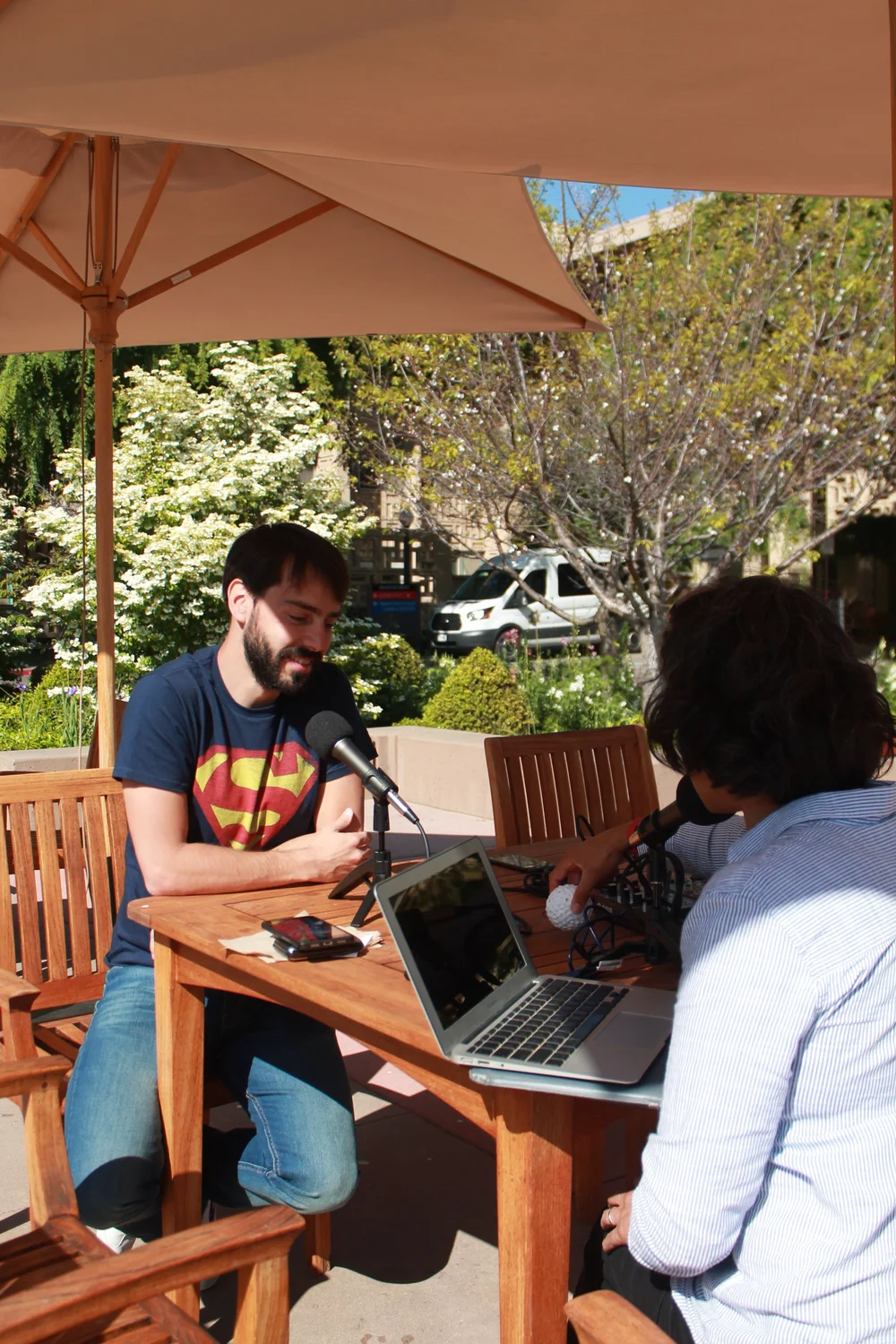
Dr. João Rodrigues decided early on that as much as he loved biology, he didn’t want to get his hands too dirty, so now he studies the shapes that proteins make by using computer models. He works with biologists and chemists to look at the way the proteins in our cells go from being like beaded necklaces to more complex structures to help them do what they need to do.
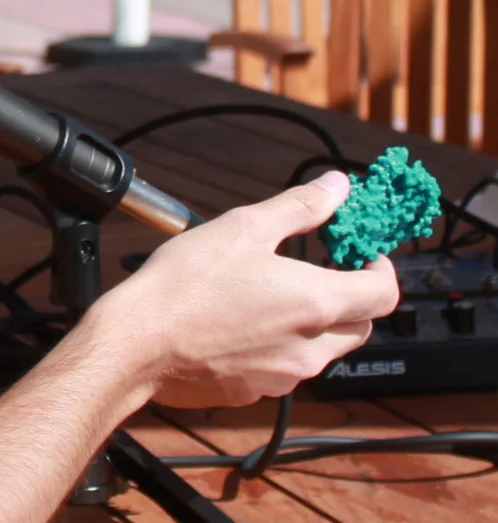
CCR5
Found on the surface of white blood cells, it has an important role in the immune system and is hijacked by HIV to get into those cells.
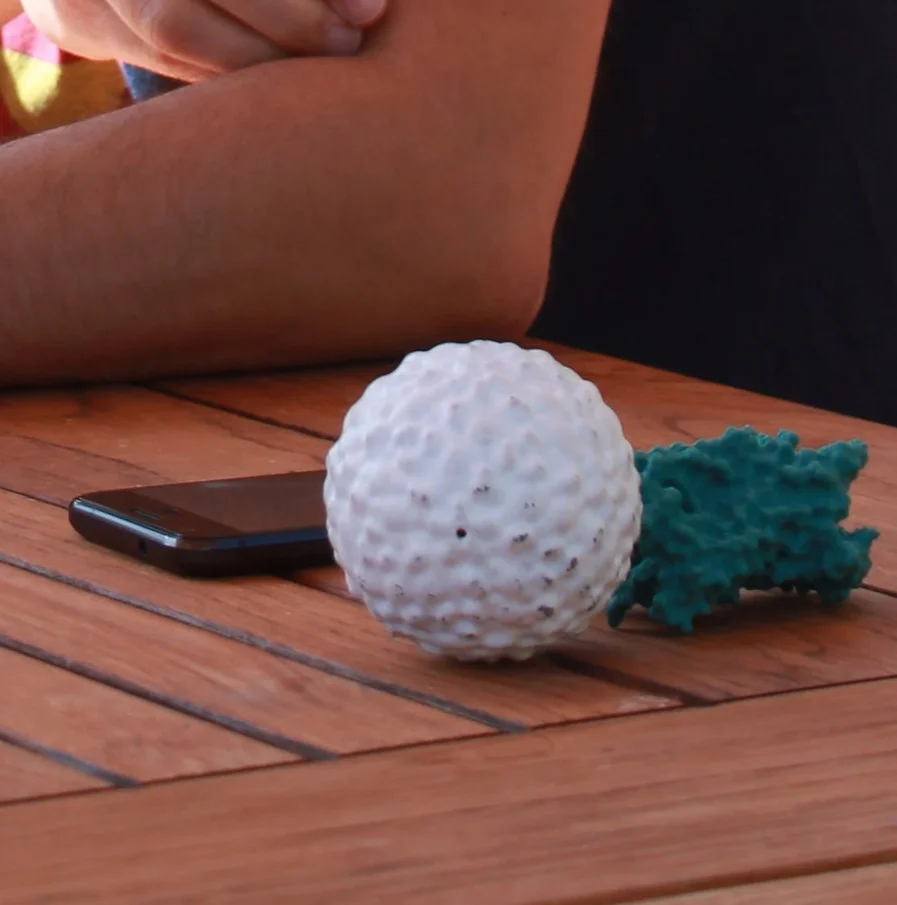
Zika
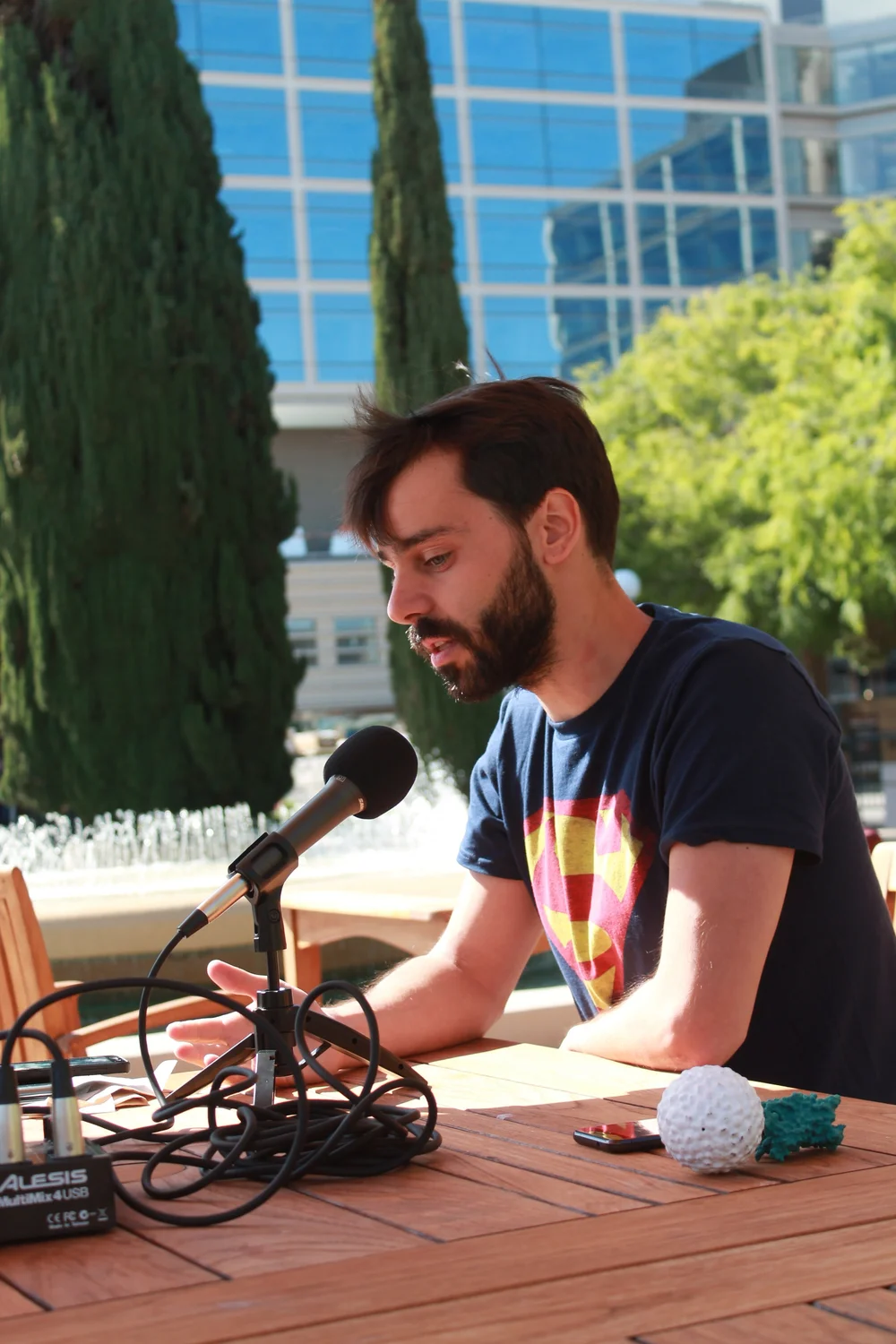
This white dimpled structure is a 3D model of the zika virus or at least the outer shell called the capsid.
Now it might not be everyone’s bag, but protein folding definitely seems to bring João some joy! If you want to try your hand at some protein structure science you can try the two games: fold it and UDock.
You know what brings us joy? The delightful guest track “Into or Over” from The Ten Thousand Ways. They’re actually no strangers to science podcasts themselves, having met during their time at Goggles Optional. You can check out their Facebook page for updates and new tracks.

